
Following Jefferson County Recent Arrests
Louisville Metro Department of Corrections sits at the center of Jefferson County arrest records. Most people call it LMDC. Police departments make the arrests and keep their own reports, while LMDC creates the jail booking record once a person enters custody. It belongs to Metro Government. It is not a sheriff's office unit. That split trips people up, because a police arrest time, jail booking time, portal posting time, and court filing time can all differ. The stable LMDC Inmate Search page leads to the operational public portal.
The public XJail interface has historically offered a same-day “Booked Today” view plus a bounded date-range booking log. Neither is a permanent archive. New entries lag. Transport, medical screening, and data work must finish first. A released person also drops off the current roster. For tighter results, use the Arrests Last 24 Hours page for the same-day method and the Police Blotter for the multi-day method.
| Window | Best use | Key limit |
|---|---|---|
| Booked Today | New adult bookings dated today | Booking date is not always arrest time |
| Booking Log/date range | Compare entries across several dates | Not a permanent archive |
| Current inmate search | Confirm present LMDC custody | Released people may no longer appear |
The 2024 fact sheet from LMDC shows real scale. The numbers are striking. There were 17,421 bookings that year, an average of 1,452 a month and 48 a day. Tuesday was the busiest booking day. LMPD led all arresting agencies, with JCSO second. Failure to appear, fourth-degree assault, and probation violation were the three most common booking-charge labels. These are dated aggregate counts. They say nothing about the portal's completeness at any given moment.
The fact sheet also sorts custody into distinct categories. It names the Main Jail Complex and Hall of Justice, along with regular in-bed detention, home incarceration, and day reporting. A person moving between these categories does not gain a new arrest or a new public entry. One caution applies. The population section carries a year-label inconsistency, so keep the source's exact label rather than recasting everything as a single simplified “jail population” figure. For a named person, a direct roster or records check beats a broad daily count. Numbers describe the whole; names need the record itself.
Arrested Overnight in Jefferson County
A late-night arrest in Jefferson County may not show up under the date you expect. LMPD procedures put transport before LMDC intake. The public result reflects booking, not police contact. So check two things. Run the current-inmate name search, then scan the same-day booking view. Try exact and partial spellings where the interface allows. Match on the booking number and date rather than a name alone.
Nothing there? Call LMDC at 502-574-8477 or use the Corrections records route. For tracking after a match, the VINELink Custody Check explains how Kentucky alerts work. Save the source URL and the time you checked. A blank result can mean unfinished intake, quick release, a spelling difference, a withheld record, a transfer elsewhere, or a portal outage, not that no arrest occurred.
Search the Jefferson County Jail Roster
The official Jefferson County jail roster focuses on current custody. Start at Louisville Metro's stable inmate-search page. From there, follow its link to the public LMDC portal. Historic official reporting describes a rich set of fields. Search by name or inmate number, and view booking and release dates, charges, bond, future court dates, date of birth, gender, and a booking photograph for current inmates. Labels and availability can change on the live site. An outage never changes which office holds the record.
Matching takes care. Two records can look like one person. Begin with the most exact lawful name you have, then compare the LMDC identifier, date of birth when shown, booking date, and arresting agency. Never rely on a photograph alone. Transcription errors, aliases, and common names mislead constantly. Posted data can also change later. LMDC's general information line can confirm the right channel, and a written request can recover a releasable record after the live display changes.
A roster result is a snapshot. Note the access time in Eastern Time. Revisit the official source whenever a release, transfer, bond change, or court event is likely. Screenshots document what the portal showed, yet they cannot replace a fresh custody check. Keep the government domain and timestamp in frame. That context tells the next reader where the record came from and what its limits are.
| Search field | Use | Caution |
|---|---|---|
| Name | Locate a likely person | Common names can return several matches |
| Booking or inmate number | Identify one LMDC record | Keep the number for later requests |
| Booking dates | Narrow a time period | May differ from police arrest time |
| Release field | Read the displayed custody change | Confirm current status directly when timing matters |
Start with the LMDC's public entry page. Use its search link to look up a name or booking number. Check identifiers and booking dates carefully. Then note the charges, bond amount, court field, and custody status. Also record when you accessed the page. If the roster falls short, the arresting agency or the court clerk holds the next answer.
The LMDC Inmate Information hub ties several tools together. It covers the current search, a jail dashboard, general details, and VINE. The dashboard shows aggregate counts, not named people. Its own policy summary traces the daily snapshots to 2021. They were refreshed three times a day, until a 2024 jail-management transition broke the automatic updates. So treat a dashboard figure and a named booking list as different measures.
The official Jefferson County inmate-search entry displays the gateway the corrections office maintains for public lookups.
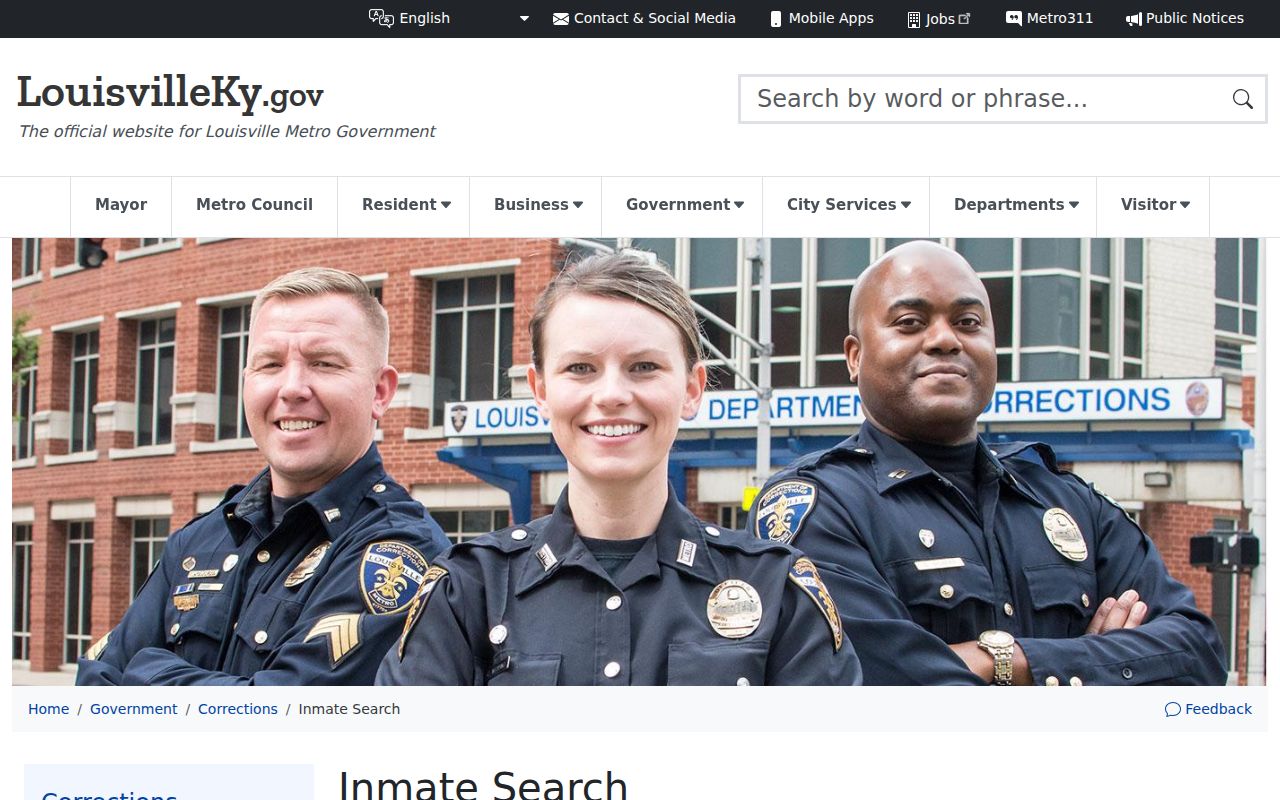
That landing page stays the best first stop. Layouts change. Automated traffic sometimes gets blocked. The search itself still works from the official address.
Booking photos need equal care. Launch coverage described mugshots for current inmates, yet the interface can skip a photo, alter its controls, or drop a public entry after release. A missing image may signal a protected category or a correction. Cite any photo with its official host and your access time. Keep it tied to the booking record that explains it.
The sheriff's office lists no booking-roster app. The LMPD service app offers maps, tips, social feeds, and department services, with no booking feed or booking-photo feature. Think of it as a service channel, not a custody tool. No app result there tells you nothing about who sits in the jail.
Where Jefferson County Arrests Appear
No single record covers every stage of a Jefferson County arrest. LMDC holds current adult jail information. The arresting police agency keeps its own report. Kentucky courts carry the later case activity and outcome. State corrections records take over after state custody begins. Local news picks stories by news value, never as a complete log.
| Channel | Photo | Status | Scope |
|---|---|---|---|
| LMDC roster | Historically, for current inmates | Official | Current local adult custody |
| Arresting agency record | Request if releasable | Official | Police report and related material |
| Kentucky courts | Not the booking-photo source | Official | Case events and disposition |
| KDOC KOOL | May show offender image | Official | State custody or supervision |
| RecentlyBooked | Often | Unofficial | County aggregator; may be stale |
| Kentucky Arrests.org | Often | Unofficial | Dated county index; not custody proof |
RecentlyBooked's Jefferson County section and Kentucky Arrests.org can recover a spelling or a date. That helps once the official roster moves on. Neither one is authoritative. RecentlyBooked even credits the jail to the sheriff. That claim clashes with official LMDC and JCSO accounts. Cross-check anything you find against LMDC, the police custodian, or the court clerk. The aggregator's Jefferson County page shows why source labels and refresh dates deserve a close look.
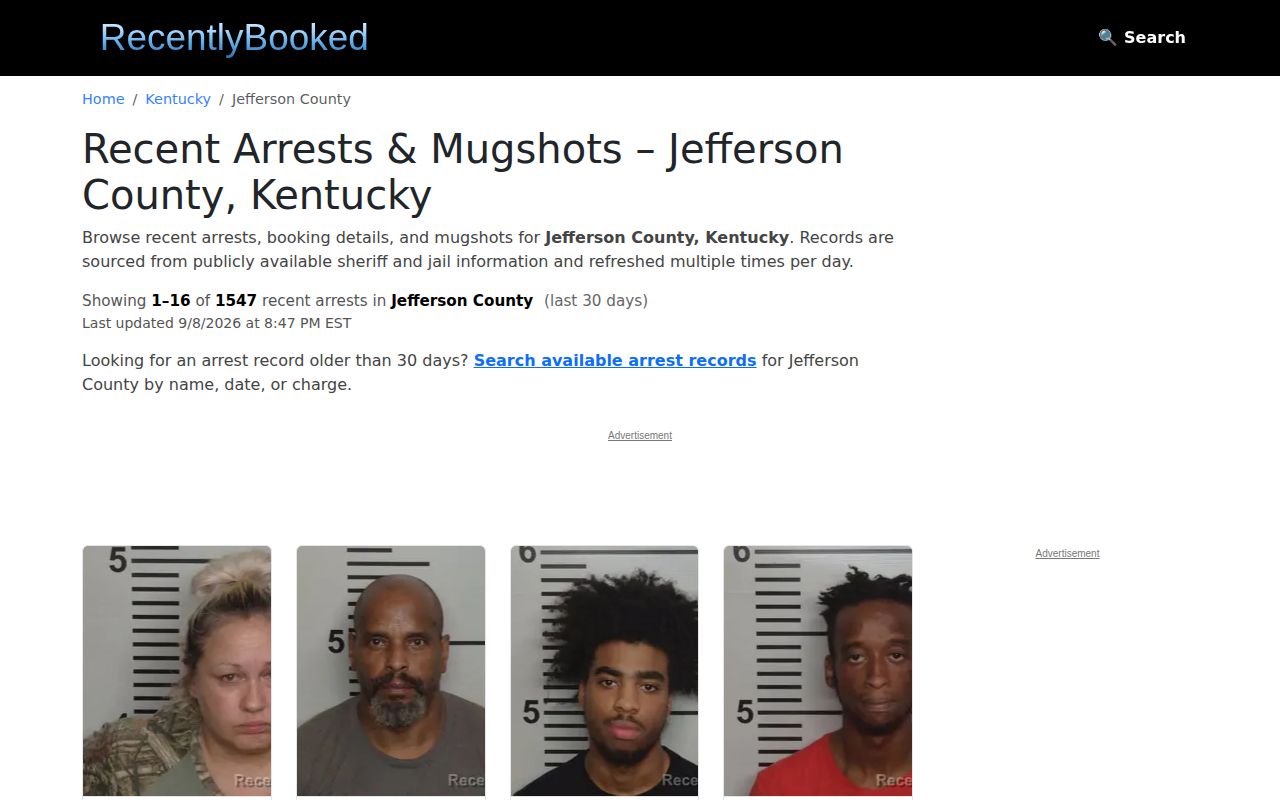
Treat that page as a discovery aid. Its shifting counts and generic agency text can't replace an official custody check.
Local outlets build a different trail. WDRB Crime Reports, WAVE, WLKY, Louisville Public Media, and the Courier Journal publish selected stories about Jefferson County arrests. Some cite an LMDC booking image or quote the arresting agency, but none operates as a complete daily county feed. Editorial choices set the timing, not jail intake. Keep each article's attribution and publication date, then confirm custody with LMDC and later case results with the court.
A sensible order starts with the office that owns the question. LMDC answers present adult custody. A municipal police custodian answers for an arrest report. JCSO handles the court process it serves, and the Jefferson County clerk settles a case result. News adds context; aggregators come last. The order matters most when two pages disagree, since copied data can keep an initial charge that a court has since changed or dropped.
Jefferson County Arrests by City
Louisville Recent Arrests traces how LMPD reports flow into LMDC booking. It works under the city's consolidated government. Jeffersontown Recent Arrests keeps that city's records custodian, photo-request rules, and REACH diversion program separate. St. Matthews Recent Arrests covers the local records desk, annual police reports, and crime mapping. That city has no daily named blotter. Adults arrested in all three places usually land in LMDC. The arresting department still owns the underlying report.
Not every police contact ends in a jail entry. Jeffersontown's REACH program lays out treatment or support as an arrest alternative where possible. That practice alone explains the gap. The LMDC roster can't count every call, incident, or law-enforcement encounter in Jefferson County.
Louisville's size can bury those municipal differences. LMPD runs its own open-records route and normally transports adult arrestees to LMDC. Jeffersontown Police publishes a detailed request process with a named custodian and itemized media charges. St. Matthews Police offers records contacts, annual reports, and crime mapping, with no daily named arrest list. One shared jail does not erase which city agency created a report. That office must still answer for it.
The 2020 incorporated-place ranking places Louisville first, Jeffersontown second, and St. Matthews third. It counts Louisville city apart from the metro-government balance, which is not a separate incorporated city. These pages follow that method rather than an informal metro-area list. Smaller cities and unincorporated areas still generate LMDC bookings. A missing city page never means those arrests fall outside county custody records.
Jefferson County Arrest Volume
Scale matters here. LMDC's own 2024 fact sheet counted 17,421 bookings for the year. That averages 1,452 each month, or 48 a day. Tuesday was the busiest booking day, and LMPD plus JCSO led all arresting agencies. Those totals describe a full year of intake work across Jefferson County. They are not a live count. A daily web result can differ. Releases, transfers, protected records, and portal timing all shape what appears.
LMDC Dashboard Update Gaps
Keep the jail-population dashboard separate from the arrest roster. Louisville Metro's own policy summary describes it as daily snapshots that began October 19, 2021, refreshed three times a day. That routine broke in September 2024. A new jail-management system took over, and automatic updates stopped after September 21 while restoration work continued. The gap matters. Aggregate charts, a current inmate search, and a booking window answer different questions, so treat them as distinct tools. Write down the source and the date first. Then note whether a figure came from a named booking result or a population snapshot.
Jefferson Arrests and Police Apps
The sheriff's office lists no JCSO booking app. LMDC offers none either. LMPD does publish an official app, though its features run toward crime maps, tips, social updates, and department services rather than arrest listings. It cannot tell you who sits in custody right now. For Jefferson County bookings, the LMDC inmate search stays the official route. The arresting department holds the report itself.
VINE Tracks Jefferson Custody Changes
Kentucky VINE helps when a person moves from LMDC into state custody. Search by partial name or an offender identifier. Then inspect each matching facility record. Register for both the local and DOC entries when both appear. Notices may cover release, transfer, escape, or other custody events. VINE is not a court case search. A booking alert may lag. Guard your private contact details and the four-digit PIN on any public page.
Not Every Contact Becomes Arrest
Police contact in Jefferson County does not always end in a booking. Jeffersontown's REACH program can steer a person toward treatment and support rather than arrest. A citation, a diversion, or a simple call for service may never reach LMDC. So recent-arrest numbers describe jail intakes, nothing more. Treat them as one slice of police work, not the whole picture.
Read a Jefferson County Arrest Record
A Jefferson County booking sheet captures one custody event. It is not a full criminal history. LMDC stamps the entry and assigns the booking or inmate identifier. The arresting agency might be LMPD, JCSO, Jeffersontown Police, St. Matthews Police, or another department, and that agency name tells you which police records custodian to contact. It does not mean that agency runs the jail.
| Field | What it shows |
|---|---|
| Name | The identity label entered at intake; verify common-name matches carefully |
| Booking/inmate number | LMDC's identifier for the custody record |
| Booking date and time | The jail intake timestamp, which may differ from arrest or posting time |
| Arresting agency | The likely route for the underlying police report |
| Charges as booked | Initial charges, subject to later amendment or dismissal |
| Bond or release data | Custody-related information at the time displayed |
| Court field | A listed future event, not the final outcome |
| Photograph | An identification image when the interface and law allow display |
Keep the booking number and exact date handy. Use them when you request a copy or chase down a court case. The court later records a disposition, which is simply how a charge ends: dismissal, plea, trial result, or some other final action. Never read that outcome from the jail entry itself. Custody status changes what each field means. Someone just booked may show in the same-day view. Yet that person can still be missing from a name search. A person currently held belongs in the live LMDC interface. Once released, that entry can drop off the public roster even though the booking sheet, police report, and court file all survive. Check KDOC if the person was sentenced into state custody. Federal pretrial detention, federal prison, and immigration custody each run on separate systems. Bond figures and expected-release dates go stale fast. A court appearance can reset the amount. An expected date never proves release actually happened. A detainer, a hold placed by another authority, can delay release too. When timing matters for safety, family contact, or a legal matter, confirm with the facility or the court. A saved roster screenshot is not live status.
Jefferson County Mugshots After Arrest
When LMDC launched XJail, reporting from that era said the current-inmate interface showed booking photographs and cleared public entries after release. That is portal history, not a guarantee that every record now carries a photo or that images stay up for a set time. A booking image simply identifies a person at intake. No gallery of person photos appears here. Need a photo the roster no longer shows? Ask the official custodian for that specific booking photograph. LMDC holds its booking file, while the arresting department keeps its own report and media. Someone later committed to state custody may appear with a separate image in the Kentucky Online Offender Lookup. KOOL is not a local booking feed. It cannot tell you whether a person was just arrested. Third-party copies often outlast the LMDC display. They can also carry stale charges or wrong agency labels. Kentucky's KRS 61.8746 covers commercial booking-photo businesses that charge for removal, though it is not a blanket deletion right. Never pay an unverified removal demand. Fix the government record first when it is wrong, sealed, or expunged, then ask downstream sites and search engines to refresh their copies.
Request Jefferson County Arrest Records
The LMDC open-records page is the place to start. Louisville Metro also accepts requests through its general open-records page and the NextRequest portal. Corrections booking sheets, release records, and releasable booking photographs all route through this channel. Expect an answer within five business days. A response is not a release guarantee. Kentucky's open-records law permits exemptions and redactions.
- Identify the custodian: LMDC for booking, the arresting agency for its report, or the court clerk for the case.
- Give the full name, known booking or arrest date range, and LMDC number if available.
- Name the exact record, such as the booking sheet, release record, arrest report, or releasable booking photograph.
- Submit through the agency's published portal and retain the confirmation number.
- Review any denial for the cited exemption, then use the agency's appeal or clarification route if needed.
The Louisville Metro Executive Director Open Records sits at 745 West Main Street, Louisville, KY 40202, and answers at 502-574-8773. JCSO keeps a separate contact office. It directs jail questions to LMDC. The address there is 515 West Market Street, Suite 110, Louisville, KY 40202-3388, and the main number is 502-574-5400.
A police report belongs with the arresting department. LMPD maintains its own open-records page. Jeffersontown Police names a municipal custodian and requires photographs and supporting documents to be requested specifically. St. Matthews uses its police records and fingerprints contact. Name the item precisely. A request for the report, citation, affidavit, or releasable photo moves faster than one for everything. Broad requests can also mix records from different agencies.
The five-day window promises a response, not full release. A custodian may redact protected details, cite an exemption, seek clarification, or point you to the office that holds the file. Save the submission, confirmation, response, and any cited statute. That paper trail separates a missing record from a denied or misrouted request. When a roster entry is unavailable, the LMDC records-request page is the official fallback.
A focused request is easier to route than a demand for every document on a person. Custodians work faster with narrow asks. Ask the custodian to state the basis for any withheld portion. Police files can hold witness details, protected personal data, active-investigation material, or juvenile information. Some content gets redacted; some falls under an exemption. A partial release is common. A delayed answer does not make an unofficial copy authoritative. The agency response and the later court file remain the sound sources. Use them for interpreting the record.
Kentucky Arrest Records and Removal Law
KRS 61.872 sets the inspection and request procedure. KRS 61.878 lists the exemptions. Juvenile files get separate confidentiality treatment under KRS 610.340. A missing youth entry is not evidence that nothing happened. Retention rules decide how long an agency keeps a record. Web-display rules decide what a portal shows.
The court route comes first. Expungement is a court process that can restrict or remove qualifying records. Kentucky's official expungement information walks through certification, automatic handling for some dismissal or acquittal outcomes, petitions, forms, and how an order reaches arresting and jail agencies. Expungement means court-authorized relief on an eligible record. It is not the same as asking a search engine to hide a link.
RecentlyBooked offers a free correction and removal policy covering wrong-person matches, duplicates, outdated information, juvenile records, and documented dismissal, sealing, or expungement. Send the record URL and official supporting documents. Kentucky Arrests.org publishes no county-specific free process, so invent no removal promise there. Fix the source record first. Then seek any stale-cache refresh. Skip paid removal services entirely.
The Kentucky Court of Justice expungement page stands as the official correction pathway.
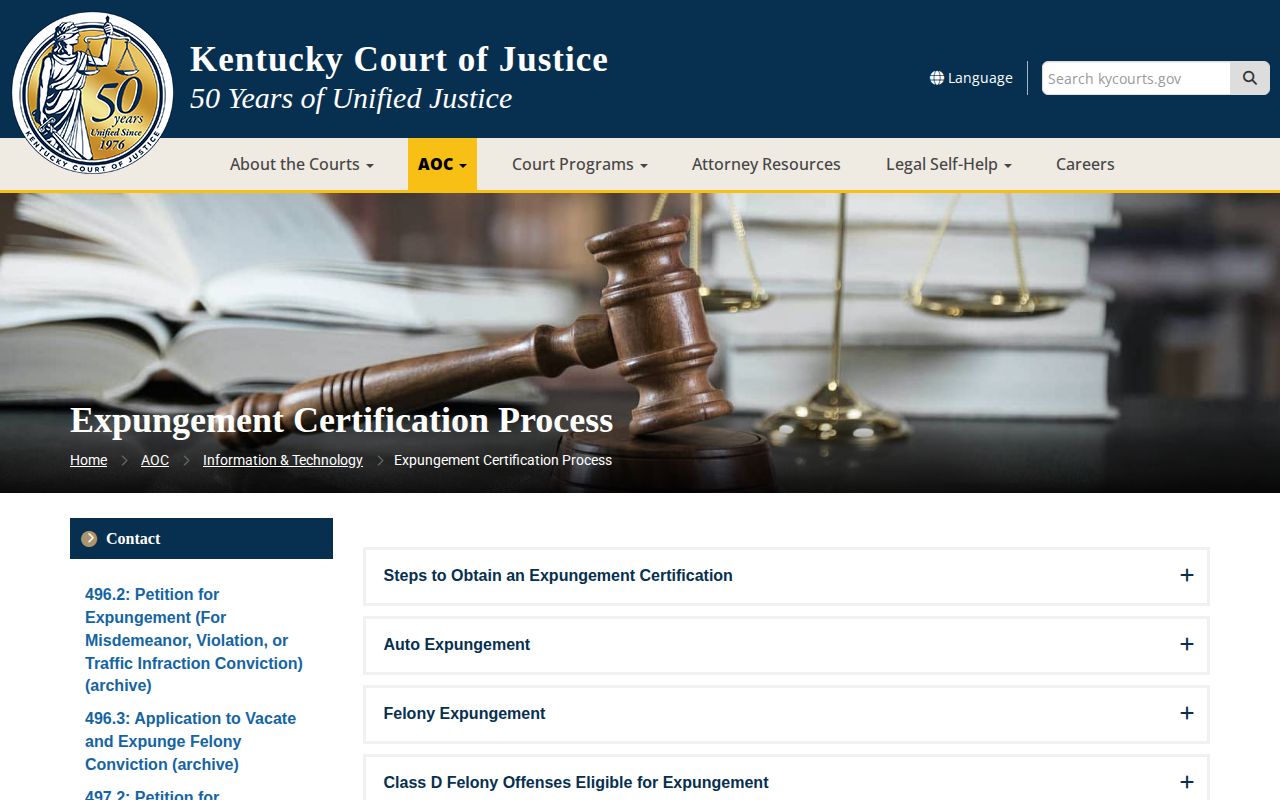
Fix the official record first. Chase copied or indexed results afterward. The court route sets the foundation.
KRS 61.8746 is narrow by design. It targets a commercial operator that publishes booking photographs and charges for removal. The statute does not force LMDC, a newspaper, a court, or every independent site to delete accurate material on demand. Disputing its application to a specific publication calls for qualified legal counsel. The safe sequence stays the same. Correct with the originating office, pursue eligible court relief, then make downstream update requests.
Old records often leave the web without being destroyed. The Kentucky Department for Libraries and Archives issues retention schedules. Louisville Metro's schedule lists police criminal-history jackets and indexes. Retention governs custody and disposal. It neither opens every item to the public nor forces an online portal to display it for the full retention span. For an old arrest, start with the creating department and date, then ask that custodian or the archives where the file belongs.
Correction and removal are separate tasks. A wrong identity goes to the custodian with proof. A sealed or expunged case needs the order sent through the official process. Only then should you ask an aggregator or search engine to refresh a stale copy. A voluntary policy cannot change a court record. An expungement order does not erase every cached copy at once.
Jefferson County Arrest Warrants
The JCSO Warrant and EPO Unit works around the clock serving court process. Its page describes that job; it is not a public active-warrant list. Kentucky eWarrants stays off-limits to anyone but authorized users. Want to check on your own name? Call the issuing court, the agency involved, or an attorney and arrange a lawful resolution. Skip unofficial name lists. A no-result there means nothing. The official JCSO warrant-service page explains the process rather than showing people.
Never confront a person you believe is wanted. Pass a tip to law enforcement instead, and reserve 911 for a true emergency.
After a Jefferson County Arrest
Booking is only the first record. An arraignment follows, an early court date where charges and custody get sorted out. Bond may allow release while the case moves forward. The amount shown on a jail roster can change at any time. Treat it as a snapshot rather than a final figure. The Jefferson County Court of Justice page lists the clerk and court locations. The KCOJ Public Menu opens the official online services.
Think of the sequence as layers. An agency makes the arrest. LMDC does the booking. Court events come next, and the eventual outcome follows after that. Sealing or expungement may follow when the law allows it. The court file, not a stale booking page, is where a case's full story lives.
One more wrinkle. The Jefferson County Office of Circuit Court Clerk serves several divisions. A roster's future-court field rarely tells the whole tale. Search the official Kentucky court entry with the best identifiers you have. If the online match stays murky, call the clerk directly. A booking number belongs to LMDC. A case number belongs to the judiciary. Keeping the two straight stops separate files from being fused into one.
Release is where records most often diverge. A person can leave LMDC after posting bond, by court order, once a hold clears, or through transfer. The roster may update faster than a news story or a copied database does. VINE and the court entry can also lag behind a very recent event. For anything time-sensitive, compare the current facility source with the court record. Note when each was checked. Never declare a release from one saved screen.
- Booking
- Jail intake and creation of a custody record.
- Arraignment
- An early court appearance concerning charges and procedure.
- Bond
- A court-set condition related to release.
- Disposition
- The recorded outcome of a charge or case.
- Expungement
- A court process affecting an eligible record.
State and Federal Custody Checks
A Jefferson County arrest does not always end at LMDC. Someone sentenced or moved into Kentucky state custody may show up in KDOC's KOOL search. It can appear there instead of the local roster. Kentucky VINE bridges the two levels. Its official FAQ warns that one person can hold both a local-jail record and a DOC record. That means registering alerts separately for each. VINELink handles custody notifications, not instant booking entries or mugshots.
KDOC also answers written open-records requests for state correctional material. Its response and copy rules cover only what the state department holds, not LMDC or a city police agency. That route becomes useful once a local booking has turned into a state sentence or transfer. The county portal may stop answering the custody question. Keep the booking number, the state offender identifier, and the court case number distinct. That way a request lands in the right system.
The Federal Bureau of Prisons locator covers federal inmates from 1982 forward. It carries no Jefferson County booking feed and no mugshots. ICE runs a separate detainee locator built on an A-number or exact biographical match for immigration custody. Neither federal tool replaces LMDC. A no-result in one system says nothing firm about another.
Which source fits? LMDC answers current local adult custody. Kentucky courts carry case results. KOOL covers state correctional status, and VINE sends custody alerts. A federal locator only matters when federal custody is a real possibility. The arresting agency holds its own incident record.
VINE can send notice of release, transfer, escape, and other custody events when the participating record supports them. Kentucky allows search by partial name or offender identifier, with registration through VINELink. A match can exist at both the jail and the DOC level. The state FAQ advises registering for both records when both appear. Alerts can lag. They are not a court ruling either. In an emergency, never wait for an automated notice.
Federal locators serve best as cross-checks once there is genuine reason to suspect federal custody. The BOP tool covers sentenced federal inmates plus some historical records, while ICE relies on different identifiers and exact matching. Neither carries LMDC's booking fields. When the question is a recent county arrest, come back to LMDC, the arresting department, or the Jefferson County court.
Expunging a Jefferson Arrest Record
Expungement in Kentucky runs through the court, never through a search engine. The official path involves certification, forms, a petition, and fees where they apply. Some qualifying dismissals or acquittals get automatic treatment. Once an order is entered, it goes out widely. Every agency holding the arrest and booking records receives it. Wait until the official source shows the change. Only then does it make sense to contact a downstream index. No single order wipes every cached or copied page in an instant.